KABLOONAS

KABLOONAS
Burial of John Franklin. Author: me

KABLOONAS

Kabloonas is the way in which the Inuit who live in the north part of Canada call those who haven´t their same ascendency.

The first time i read this word was in the book "Fatal Passage" by Ken McGoogan, when, as the result of the conversations between John Rae and some inuit, and trying to find any evidence of the ill-fated Sir John Franklin Expedition, some of then mentioned that they watched how some kabloonas walked to die in the proximities of the river Great Fish.

I wish to publish this blog to order and share all those anecdotes that I´ve been finding in the arctic literature about arctic expeditions. My interest began more than 15 years ago reading a little book of my brother about north and south pole expeditions. I began reading almost all the bibliography about Antarctic expeditions and the superknown expeditions of Scott, Amundsen, Shackleton, etc. After I was captured by the Nansen, Nobile and Engineer Andree. But the most disturbing thing in that little book, full of pictures, was the two pages dedicated to the last Franklin expedition of the S.XIX, on that moment I thought that given the time on which this and others expeditions happened, few or any additional information could be obtained about it. I couldn´t imagine that after those two pages It would be a huge iceberg full of stories, unresolved misteries, anecdotes, etc. I believe that this iceberg, on the contrary than others, would continue growing instead melting.


miércoles, 5 de agosto de 2015

FRANKLIN EXPEDITION PLAYMOBILIZED

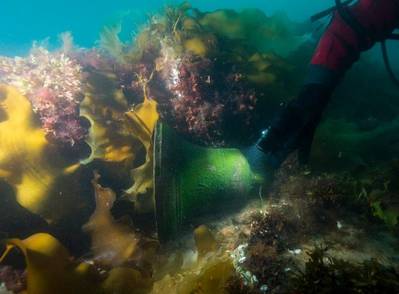
It was a matter of time that the Franklin expedition ended in the Playmobil world. It has been by chance that I have found this shipwreck diorama in internet which, without no doubt at all, apparently resembles the Erebus shipwreck almost perfectly, including the cannon and the bell which were actually found in the Erebus and also the skeleton of the man who is supposed will be found on board, the big man with long teeth.

Author Retroplaymo
http://retroplaymo.blogspot.gr/2014/02/the-shipwreck.html
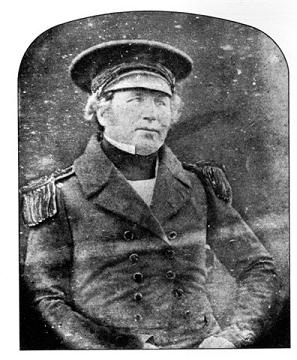
And how I stumbled upon this? You may be asking to yourself...well it was after Regina Koellner, a Franklin friend, were speaking about how transforming a playmobil into Francis Moira Rawdon Crozier that we began to discuss about what would we need to make a proper diorama about the Franklin expedition.

Daguerrotype of Crozier by Richard Beard.
 I began to wander in internet looking for a Playmobil ship with three masts to use as Erebus, then, I found this picture which amazed me. I linked it into our beloved facebook group and it was such a success that I think it was even sent to Ryan Harris, the chief diver who is directing operations in the actual shipwreck in the Arctic Archipielago.

Someone even suggested that the diver over the deck could be him, not in this case because that particular one is in fact a playmobil woman. Perhaps he could be the other diver who is wearing the dry diving suit.

I will try to contact the author of this shipwreck diorama and warn him about the effect his work has caused in the Franklin world, I thought at the beginning that his intention was to recreate the Erebus shipwreck but after identifying the source of this picture, a wonderful blog called Retroplaymoland, I have learnt that his intention was to recreate Greek´s shipwrecks.

These are the pictures of the actual shipwreck, judge by yourself:

http://www.charts.gc.ca/announcements-annonces/2014/serendipity-sonars-surveys/img/CMOS-Trifold%202-1.jpg
Erebus divings- The cannon
Erebus Divings- The Bell
Of course, soon my imagination combined with these long summer afternoons made me put all hands on deck. I inmediately stole Regina´s idea, for which I am really and sincerely sorry Regina, but you know I couldn´t help it, I had all the ingredients at hand!! and this was the result:

Crozier, last man standing carries his sword and gun and is prepare to his last death march. (Author: Me)

 I cut some yellow pieces of cloth to make the golden band of the cap and the epaulettes, made the scarf with a narrow black ribbon and made the white shirt collar with the corners of a paper. This playmobil who was a policeman in his other life looks now as if he were going to begin to walk in deep snow at any moment! 

 What is coming next? Only the future will say, I positively know that Regina is at work and surely she will be able to do a much better job that I have done, but what is certain is, that with this little Crozier, I  will have encouraged the imagination of others and I hope to see soon another scenes of the Franklin expedition reenacted in the Playmobil world.

This,unfortunately for my Peter Pan syndrome, hasn´t been my first approach relating Playmobil with the Franklin expedition, I did some quick dioramas once on which you can see a blonde Franklin with a map, James Fitzjames in his winter blue outfit and some other sailors on board a boat accompanied by Neptune the expedition´s dog. I know I should have used a white surface for this but ...next time, friends.


martes, 4 de agosto de 2015

DAYS BEFORE THE DISASTER - ANOTHER FRANKLIN´S BOAT DEPICTION FOR THE COLLECTION

From time to time I go fishing into Google and I almost always come back home satisfied and pleasently surprised when I find something which at least is new for me. This time the deep ocean of internet has let me catch this little prey. An interesting sketch which shows several crew members of the Franklin expedition dragging two boats with sails.

http://www.postcardgallery.net/explorers.html

Judging by their outfit it is clear that this post card was based on the famous painting by Thomas Smith. From the determination of their countenances and from their apparently strong attitude one would say these men were days if not weeks far from the moment on which Thomas Smith depicted a very different scene:

They forged the last links with their lives': Sir John Franklin's Men Dying by Their Boat During the North-West Passage Expedition by W. Thomas Smith

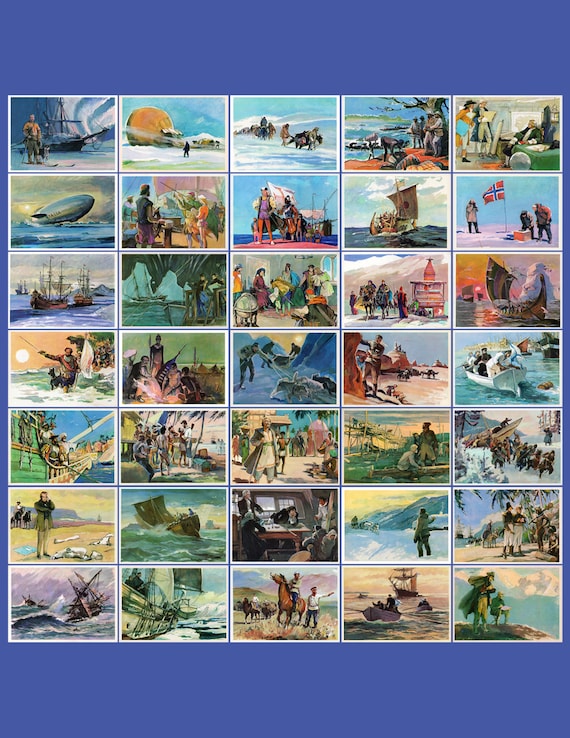
I have found this little jewel in a Post Card dedicated web site. The author, P. Pavlinov from Moscow drew in 1979 a collection of 35 post cards representing 35 different explorers. Hidden under a blue nice cover the author´s choice includes some well known polar explorers like Salomon Andree, Nansen, Robert Falcon Scott, Amundsen, Nobile, etc.

Geographical discoveries
http://www.postcardgallery.net/explorers.html
I don´t know nothing about the author, those are the paradoxes of Google, sometimes it allows you to catch rare items like this but it shows itself hermetic to let you know nothing about the people who are behind the scenes. Perhaps any Russian visitor of the blog could put some light about the author´s career.

I don´t know nothing about the author, those are the paradoxes of Google, sometimes it allows you to catch rare items like this but it shows itself hermetic to let you know nothing about the people who are behind the scenes. Perhaps any Russian visitor of the blog could put some light about the author´s career.

For those who love to collect Franklin related stuff, following the link under the next picture they could buy the 35 post card set for a very decent price:

https://www.etsy.com/listing/213863965/geographical-discoveries-artist-p

miércoles, 1 de julio de 2015

LET´S DO IT! HMS TERROR GIVEAWAY: Building HMS Terror: HAPPY BIRTHDAY HMS TERROR - WHEREVER YOU ARE

Following the stream of sharings provoked and estimulated by the blogger "Ship Modeler", and in order to get a chance to obtain the juicy prize offered through his proposal, this is my sharing, the blog post I use to link Ship Modeler´s blog to my favourite bar in Google Chrome, which interestingly, corresponds with the HMS Terror last birthday:

http://buildingterror.blogspot.com.es/2015/06/building-hms-terror-giveaway.html


Building HMS Terror: HAPPY BIRTHDAY HMS TERROR - WHEREVER YOU ARE: Today marks the 201 st anniversary of the launch of HMS Terror in Topsham, Devon.  It also marks the first anniversary of Building Ter...


viernes, 26 de junio de 2015

THOMAS BLANKY: A LIVE IN THE HELL

Rivers of ink have been written about John Franklin, Fancis Crozier, James Fitzjames and other members of the Franklin last and lost expedition. But not too much have been said about the Ice Master of the HMS Terror, Thomas Blanky. Only few references exist here and there in some books and articles., enough to realize that the poor man spent a long part of his live in Hell.

Thomas Blanky was by then a battered veteran of several Arctic expeditions when he joined the Franklin expedition as Ice Master of the Terror with 45 years.  From the William Battersby´s book, about the life of James Fitzjames, I have learnt that Thomas was a Yorkshire man who hid a little mistery which endarkened a bit his own origins. Apparently he concealed his Jewish origins and borne a false surname.

But It is again the almost magical book written by Richard Cyriax which put some light about forgotten details of the Franklin expedition. From his book I have found not only the details of his birth place and date of birth but also data about the Arctic expeditions on which he participated.

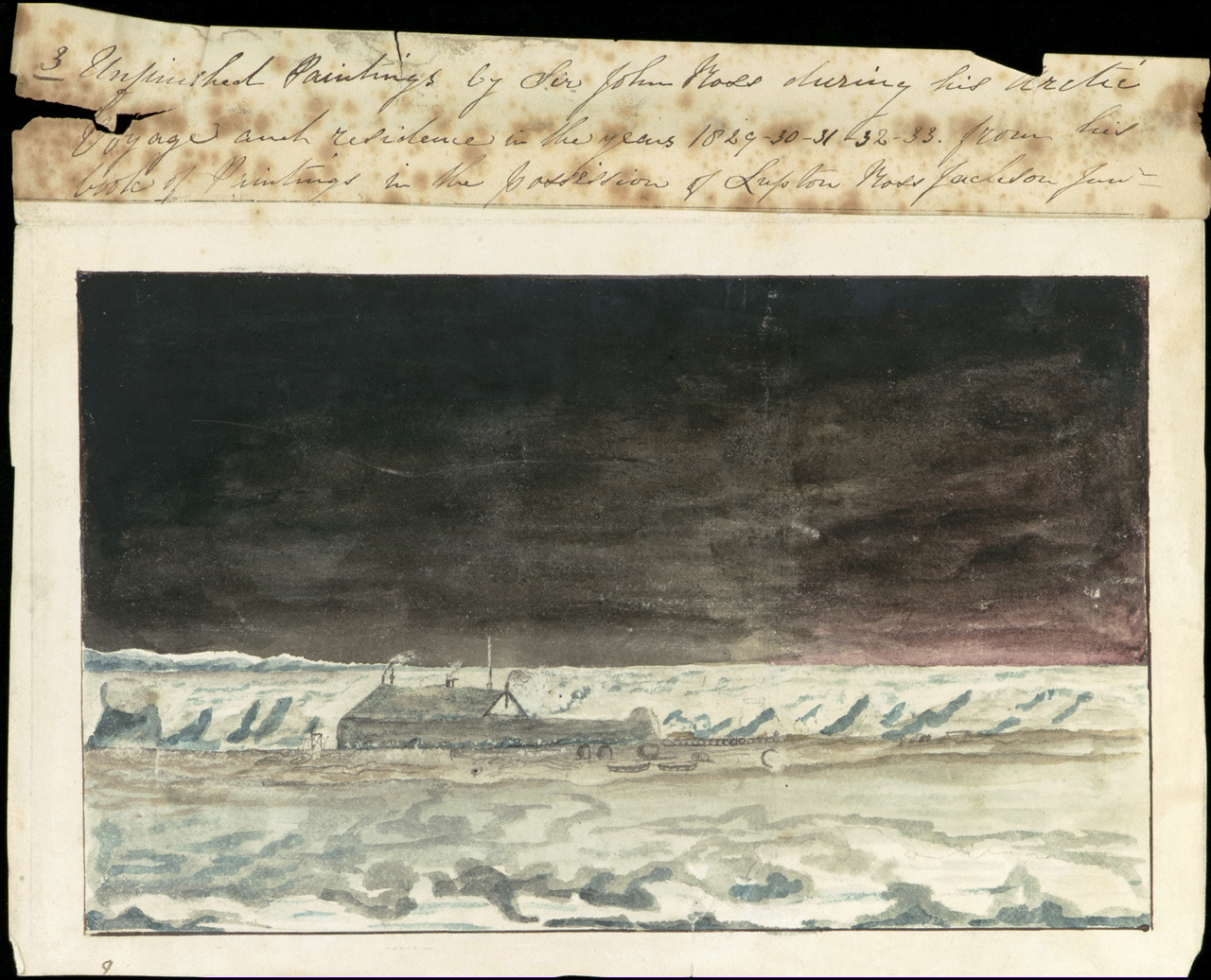
He was born in Whitby in 1800 and worked as an able seaman in merchant ships, whalers and in ships of exploration for three Arctic expeditions before getting involved in his last adventure in 1845. His Arctic Curriculum, in chronological order, is the following: he was able seaman in the George Lyon expedition aboard the HMS Griper in 1824, able seaman during the fourth and last Parry expedition to the North Pole in the HMS Hecla in 1827 and as mate during the ardous and hazardous long voyage of John Ross  aboard the Victory during the years 1829 to 1833.

John Ross, unfinished sketch of shelter and boats (1829-1833)
http://metaincognita.tumblr.com/post/18773476763/john-ross-unfinished-sketch-of-shelter-and-boats

He addressed a letter from Whalefish island to his wife. Part of those last words  were published in the Quarterly Review. Its content said:

" Should we not be at home in the fall of 1848, or early in the spring of 1849 you may anticipate that we had made the passage, or are likely to do so, and if so, it may be form five to six years it might be into the seventh were we return; and should it be so, do not allow any person to dishearten you on the length of our absence, but look forward with hope, that Providence will at length restore us safely to you."

Encouraging words, indeed, which couldn´t be further from the cruel reality which would fall over their heads.

The expectations of Thomas Blanky about the duration and end of the journey cast a weird contrast if you compare them with those last words written by James Reid, his counterpart in the HMS Erebus. Reid  told his wife the following:

"It may be two years, it may be three or four, but I am quite willing to go"
"Mr Enderby has been a good friend to me. He will look after you if I should never return"


Thomas Blanky clearly weighed rightly that the expedition could last much more than the time the organizers had imagined. Clearly his previous experience during the four years  of the John Ross´s voyage to the Arctic in the Victory had left a deep print in his mind and his point of view was much  closer to reality than the one of any other member of the expedition. Despite of that, the fact of having survived the odyssey of struggling for four winters in the Arctic, could have led him to believe that everything was possible and that being captured in the jaws of the Arctic archipielago not necessarilly had to mean death. That could possibily be the reasons wich made his last words look much more optimistic than the Reid´s ones.

Blanky performed the role of a main character during several situations in the John Ross exedition. He participated in several important and long sledge trips during the Victory expedition. He was with James C. Ross when they reached the North Magnetic Pole and he risked his credibility before Ross´s eyes when he spoke on behalf of the men of the expedition after they had abandoned the Victory. While dragging the boats towards Fury Beach the men wanted to propose their Captain to abandon the boats and keep on walking to the Fury Beach food caché only dragging the sledges. John Ross from his side, perceived this as an act of mutiny, and if it not were because Thomas Blanky had deserved the unconditional admiration of the Captain Ross during the whole journey, he could have seen truncated his career, but that not happened, quite the contrary. When they reached England in 1833 he obtained a good recommendation from John Ross which led him to command his own merchant ship. After that, and for some reason, surely his veteran background, he gained a vacancy as ice master in the HMS Terror, which, sadly in his turn led him to his irremisible death.

If we consider and imagine that Thomas could have survived at least five years during the last Franklin expedition, as certain relics could seem to demonstrate, and that he could have participated in the death march which had taken place from the year 1848 to 1850(?), then he would have spent nine years of his live confronting the hardest conditions of his live, (not counting the three years of his previous Arctic expeditions). Strangely, after having suffered the hard experience of the Victory expedition he accepted joining this second and dangerous feat. If I were had asked to do that, I  would surely have rejected gently the offer, but he didn´t not. As it uses to happen to old and experienced mountaniers. The call of the Arctic or the mountains is a tantalizing voice which one can hardly ignore. 

Paradoxically, the men of the Franklin expedition thought on Blanky as a living talisman who could only bring them good luck.

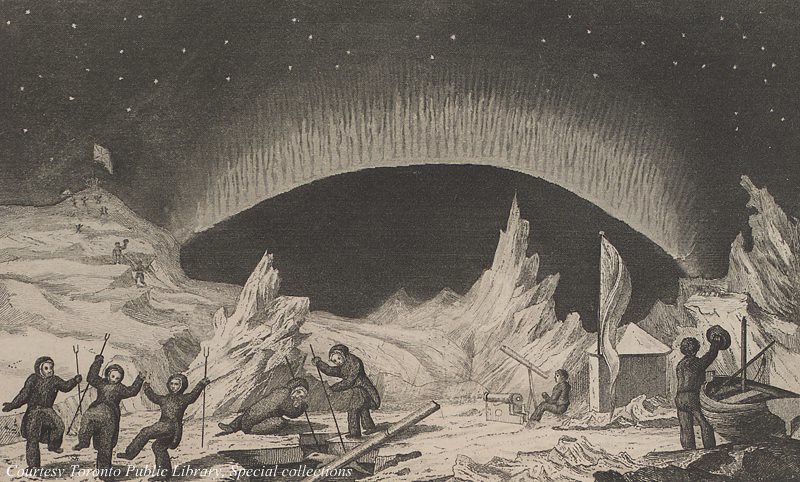
It has become for me a kind of obsession during these last three years looking for paintings, drawings and sketches which could help me to put a face to those men who participated, perished or were related with the nineteenth century Arctic expeditions. Lots of those men haven´t left any portrait,. Only with some luck we could find an errant silhoutte after hours fishing in the Google ocean, I sometimes feel as if I were an Inuit trying to catch a seal in an ice hole. But it happens that sometimes the solution is right under our noses, and one only can find them if one knows where to look for. I thought that this could be the case of Thomas Blanky who could be one of the three happy men who are dancing in the left corner of this not very well known sketch, or perhaps is he the man who is waving the hat close to the boat?

"Commander Ross planting the British standard on the true position of the magnetic pole"
Toronto library 
https://www.flickr.com/photos/43021516@N06/5448071669/

Six men participated on that sledge trip, Commander James Ross, Thomas Blanky, Thomas Abernethy and three other men who were the lucky ones on reaching the mystic place. The sketch represents seven men, an extra one and a boat which definitely wasn´t carried with them to the North Magnetic Pole. For that reason, and because those other seven men who are painted in the background climbing a nonexistent hill, I harbour serious doubts about the accuracy of this representation, but it is a nice feeling thinking that he could have been inmortalised for ever though  in this inexact way.


miércoles, 27 de mayo de 2015

ODE TO SCURVY

The scars are open
The flesh is rotten

The gums are receding
The teeth are bleeding

The men are dying
The corpses are lying

The bones are broken
The marrows are woken

The hungry is winning 
The faces are grinning

The souls wander in sorrow
They´ll tell a tale of horror

sábado, 25 de abril de 2015

THERE LIES A VESSEL IN THAT REALM OF FROST, NOT WRECKED, NOT STRANDED, YET FOR EVER LOST


"There lies a vessel in that realm of frost,


Not wrecked, not stranded, yet for ever lost;

Morn shall return, and noon, and eve, and night,

Meet here with interchanging shade and light;

But from that barque no timber shall decay, 

Of those cold forms, no feature pass away; 

Perennial ice around th' encrusted bow,

The empty deck, and shatter'd masts shall grow, 

Till from the sun himself the whole be hid, 

Or spied beneath a crystal pyramid'

Few times so few words could have described better the tragedy happened in the Arctic, and so few words could have better described the present situation on which the Terror is eluding the attempts of the Canadian government to find it. It looks like as if the poem had predicted that any shipwreck would ever be found. 

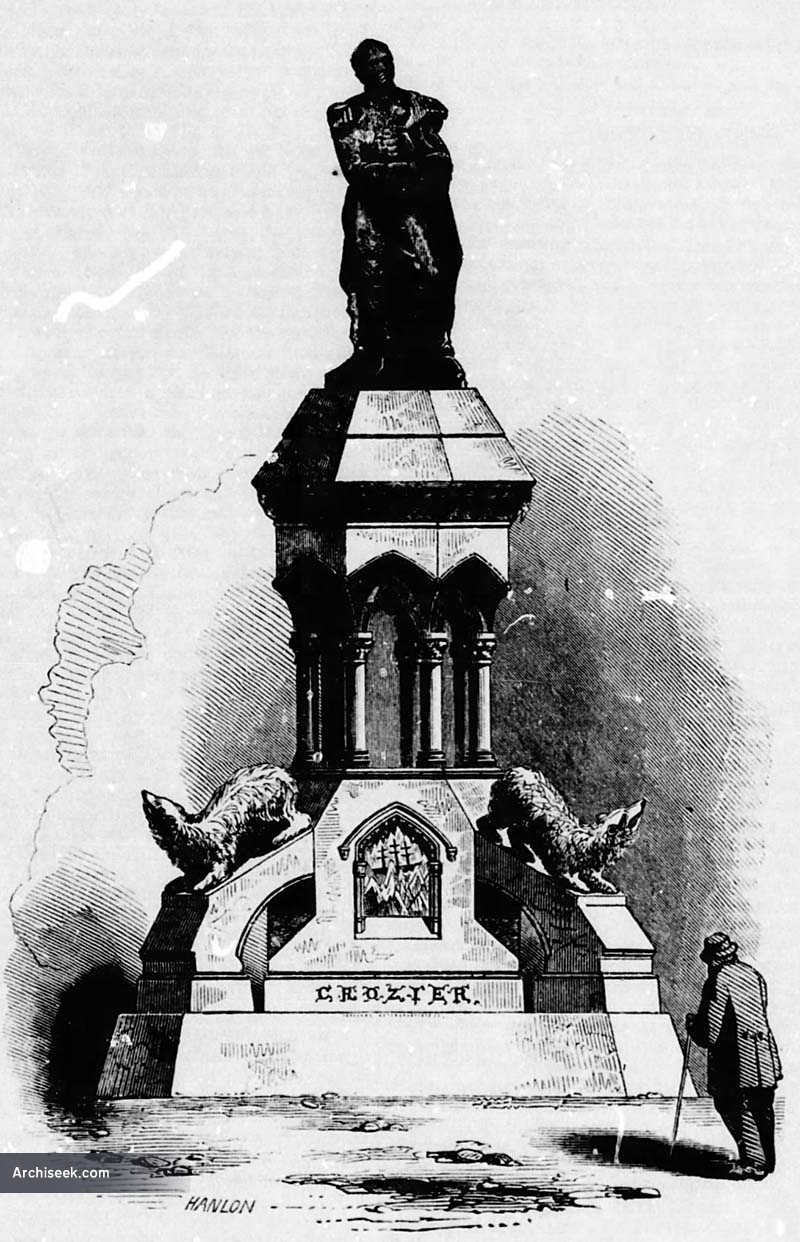
Those, are the words which accompanied the working model over which the Francis Rawdon Moira Croizer statue in Banbridge was based. 


Colossal Statue of the late Captain Crozier, RN

http://archiseek.com/2014/1862-crozier-memorial-banbridge-co/

It was the same sculptor, Joseph Robinson Kirk, who made both statues, the marble model and the statue which is guarding Crozier´s house in Banbridge.  The author of these words, as Randall Osczevsky indicated me, seems to come, or better said: based, from the poem called Greenland by James Montgomery. The poem is much larger and it looks as if some phrases would have been selected to fit in some sort of plaque or engraving in the Kirk´s marble model.  

Joseph Robinson Kirk, R.H.A. Photograph.
http://www.libraryireland.com/irishartists/joseph-robinson-kirk.php
Kirk´s work didn´t end here, he also made a bust of Francis Leopold McClintock whose location is unknown to me and the marble Crozier memorial of Seapatrick church, which Regina Koellner indicated me  was also made by him. The memorial it is described here as follows:

"The two small panel carvings in the niches, with the larger Crozier Memorial (also by J.R. Kirk) in Seapatrick Church, are of considerable merit. All display the Erebus and Terror (the ships of the expedition) starkly embedded in great chunky three-dimensional ice-floes, exciting and near-abstract triumphs of the imagination, as weird and poetic as the rockery mountains invented by Joachim Patinir, and for the same reason: neither artist had ever seen what he sought with such intensity to portray."

Crozier´s memorial in Seapatrick Church, Banbridge
http://freespace.virgin.net/mp.hearth/Banbridge_Crozier.jpeg
Our people in the field, Regina Koellner, Kat Stoetzel and William Greenwell, are doing some researching in Banbridge area right now. Regina has allowed me to show a better picture of the Crozier´s memorial in Seapatrick church:


Crozier´s memorial in Seapatrick Church, Banbridge
Photo by Regina Koellner.
To me, Montgomery´s poem, or its arrangement, is like a premonitory dream. The selection of phrases and words could  have hardly been better chosen. However, no matter what the poem says the truth is that:

The Terror will be sooner than later found, it won´t be forever lost

Not stranded, that for sure, but  shipwrecked and covered of moss,

No decayed timber will be found,  cold waters will preserve them for us,

But her forms will indeed have passed away , about that you can trust

Her empty decks must be found, that is true, but broken and rust 

Her shattered masts won´t grow again, they are not longer holden to the ship fast


jueves, 16 de abril de 2015

ABOUT GRAVES, CAIRNS AND PAPERS

Not long time ago I talked here about other winter places where other expeditions had opened small graveyards during their long stays in the Arctic. They did it while trying to find a way through the Northwest Passage or while looking for the lost Franklin expedition. The more one investigates the more one realises that it seems that the arctic is virtually full of these tiny mini-graveyards or at least it was once full of them. Now we can see only what has been left of them, which amazingly, is more than one could expect at first sight.

Thanks for a link to a webpage which has recently fallen in my hands, kindly provided by the enthusiast Franklinite Regina Koelner, and thanks too because an article, which Peter Carney has facilitated me, I have been able to gather enough information to show you another interesting place  which rests right at the doors of the beautiful but dangerous jaws of the Arctic Archipielago.


Monte Dundas North Star Bay, by Juan F. Abal
Thanks to Juan F. Abal, traveler and great photographer.

The North Star expedition of 1849-50 led by the Master James Saunders is not a well known expedition. However, the historian R. J.Cyriax found it fascinating enough as to write a short article called "The Voyage of HMS North Star". Their  mission was apparently simple, resupplying a rescue expedition which had been sent after Franklin and his men in 1848 under the command of James Clark Ross. James C. Ross together with Edward Bird were stopped in Lancaster sound on board their ships HMS Investigator and HMS Enterprise. Orders said that if James Saunders was unable to find Ross, they had to leave the stores at some specified places on the south shore of Lancaster sound.

The North Star tried to find its target during the summer of 1849, but, after being unable to find Ross, the increasing and growing ice forced them to winter in the northwest coast of Greenland. The ice spat them, providentially before being crushed,  into a free of ice small bay which they called (how not) North Star Bay. Paradoxically, what Saunders didn´t know was that J.C. Ross had come back to England that same summer.

James Saunder was an experienced sailor who had accompanied George Back as master in the HMS Terror in his voyage of 1836-37, however, his expedition was not prepared to winter in the Arctic. They had been specifically ordered to avoid that situation, but orders, are like the wind in the Arctic. Orders can push you into one direction and your fate can push harder you into the opposite one.

They had to fight their way to survive during the killer frozen months when the sun disspears under the horizon. That unexpected situation cost them a high price. Four of the 63 crewmen died during the winter and spring of 1849 - 50. It is said that the deaths weren´t provoked by hunger (remember they carried tons of extra stores to be deployed somewhere) nor by cold, ...by what them? .The fact is that I haven´t found anywhere any reasonable explanation for those four deaths.

North Star Bay is a place which, in my opinion, has certain resemblance with the geographical features of Beechey Island. As it happen in the latter, there are here too steep cliffs and a prominent table-shaped mountain which emerges from the ice in winter and from the seas in summer. That gives the place a creepy atmosphere, where a dwarved ship  beseted at the feet of the mountain by the smooth ice of the bay, looks like if it were lying in an inmensive grave headed by some sort of giant tombstone.

1850 painting by one of the men from the North Star. You can see the ship at the base of Mt. Dundas.
It was in the south coast of this small bay where was built our small graveyard. One mile and a half inland from the beach. The four men died one by one during one winter which a lot of accounts of the time describe as an uneventful winter. Definitely it was not uneventful for the four poor men who were buried there. Close to the graves was built a big cairn which was a matter of discussion for David Woodman in his book Unravelling the Franklin Mistery. But that´s another different story.


Graves of the North Star
http://beyondthebackyard.com/2014/09/03/icy-imprisonment-the-1849-voyage-of-the-hms-north-star/

In the course of the first winter endured for some of those Arctic expeditions, usually there were several casualties, normally from one to four and sometimes more. As for an example, the three famous men buried in Beechey Island during the first winter (1845-46) of the last Franklin expedition, four men during the second Parry expedition, three men lost by George Back during his expedition in HMS Terror 1836-37, etc.

Lack of preparation could have been one of the causes. One of the main differences between this expedition and Franklin´s one, for instance, could be that while the Franklin´s one was exquisitely prepared to spend three or four winters in the arctic, the North Star´s one must be back at home before the winter will fall.

Perhaps the selection of the crew was not so rigurous as it could have been for the Franklin expedition. Perhaps James Rae, the assistant Surgeon of the ship could have told us what happened during that winter,...yes, you have read it well, James Rae. And now I will try to answer the question you have in mind. I have found data about two different James Rae of the time who were assistant surgeons in two different websites. In the first, the Tait´s Edimburgh Magazine,  it is said that this man was the son of a John Rae from Myre, Orkney Island (suspiciously close to the location of the Hall of Celestrian). He died in front of the coast of Biafra, Africa on board a steam vessel called Pluto. Likely the ship which was capturing slave ships in 1860.

Capture of a large slave ship by HMS Pluto 1860

The second reference
states that this James Rae was born in 1821, and that he was the one who participated in the North Star expedition of 1849-50. He was the son of a Doctor called John Rae, at St Ninians (near Glasgow I think) but there is no mention about our beloved John Rae the famous explorer. Could that important data be omitted? I find that fact of such significance as to be mentioned in his short biography. If he was, then I didn´t know John Rae´s brother was a Polar explorar too! Tons of paper would have been written about  John but not too much about his brother. I couldn´t find any decissive clue in the books "Fatal Passage" or in "Lady Franklin´s Revenge" nor in some other books. Should we then think that they weren´t actually brothers?.

Returning to North Star bay, it has taken me some time to identify where the four graves of these poor sailors were dug. At first, I though they were placed in the flat istmus which links Mt Dundas with the mainland. After, and according to certain pictures, the drawing of the burial site, and thanks to a short description of the place.  I have located the graveyard  at the other side of the bay, in the south coast and close to the harbour. The mountains in the background must correspond with those at the other side of the Pituffik glacier. 


North Star Bay and Mount Dundas at the background
https://en.wikipedia.org/wiki/North_Star_Bay#/media/File:Thule_air_base_above.jpeg 

There is at least one burial plot on the istmus but it seems clear that the remains of these men were buried on the other side of the bay,
William Sharp grave
http://www.thuleforum.com/rose/index_1.htm

James Saunders left several cairns with records which were found time after for other rescue expeditions. One of the recovered  notes reminds me strongly the sober content of the sadly famous Victory Point Record left by the Franklin expedition in King William Island. The note reads:

" This paper is placed here to certify, that H.M.S, ' North Star ' was beset, at the east side of Melville Bay, on the 29 th of July, last year, and gradually drifted from day to day, until, on the 26th of September, we found ourselves abreast of Wolsten holme Island; when perceiving the ice a little; more loose, and the Sound perfectly clear, wo made all ])lain sail, and pressed her through it, anchoring in the lower part of the Sound that evening, and arrived in the Bay on the 1st of October, whereshe remained throughout the winter.

It is my intention to leave as soon as the breaking up of the ice will permit, and prosecute my voyage in search of the Arctic ships.

(Signed) J. Saunders, Master adn Comander
.
" North Star Bay, Wolstenholme Souud, "April 15th, 1850. " Lat. 70º 3´ N.; long. O" 30' W."

They found some other papers telling the same story, in the back of one of them were written the names of the men who died in that desolate place. The paper said:

William Sharp, A. B., died 1st of November, 1849

William Brisley, boatswain's mate, died 3 1 st of January, 1850.

Richard Baker, A. B., died 7th of April, 1850. 

George Deverell, A. B., died 17th of May,

"As we contemplated these sad memorials of our departed countrymen, one consolation was felt by us " they had died surrounded by friends, and by all the appliances which a Christian charity could afford; and their last wishes were confided to those who had been their fellow-sufferers throughout a dreary and wretched Arctic winter. Thus far they had been happy; but when we recal the glowing anticipation that swelled our breasts, on joining our Expedition; when we think with what fondness we dwell upon the happiness that will gladden our hearts, as the shores of dear England will again burst upon us; we may be permitted to let fall a tear, and to pity the lot of those whose remains lay amid the granite monuments of nature, thousands of miles from their native homes."

It is funny because another fellow Franklinite, Randall Osczevsky, raised not long time ago the issue about why James Fitzjames and Crozier left so scarce information on the paper they left under the cairn of Victory point if they had a whole blank side of the paper to explan all the proceedings of the ships till the date. They even scribbled the margins of it but it seems that they despised, or never thought on, the idea of writting in the back side of the paper,...well. James Saunders did that, why didn´t they do?.

The graves and the records were not the only thing the James Saunder´s expedition left in the Arctic. They left too their stores, as far as Wollaston Island, a place close to the mouth of Lancaster sound. The cache was soon looted, apparently by locals.

Only one tombstone remains there, that of William Sharp. The others seems to have dissappeared. I have read that this one was  moved further inland, perhaps the other were swallowed by the increasing level of the sea forever. The grave of William Sharp is and will be there for now witnessing how war ships come to the shores of the North Star Bay and see how planes land and take off from the Thule air base which was built there.


To see the Grave of William Sharp visit this place:
tp://www.arcticphoto.co.uk/supergal/QQ/qq97/qq9741-17.htm